




India customers to view on amazon.in
The AI Efficiency Gap Reshaping Businesses in 2026
As we approach 2026, the business landscape is undergoing a significant transformation driven by artificial intelligence. The concept of the AI efficiency gap is becoming increasingly important as companies strive to stay competitive.
- The Current State of AI in Business
- Understanding the AI Efficiency Gap
- Defining the Efficiency Gap Phenomenon
- Measuring AI Productivity Impact Across Industries
- Real-World Examples of Efficiency Disparities
- The AI Efficiency Gap Reshaping Businesses in 2026
- Market Polarization Between AI Leaders and Laggards
- Competitive Advantage Metrics in the AI Economy
- Industry-Specific Transformation Patterns
- Critical Factors Widening the Efficiency Gap
- Data Quality and Accessibility Challenges
- AI Talent Acquisition and Retention Strategies
- Technology Infrastructure Requirements
- Financial Implications of the AI Divide
- Cost-Benefit Analysis of AI Implementation
- ROI Disparities Between Early Adopters and Followers
- Smart Investment Approaches for Closing the Gap
- Practical AI Adoption Strategies for Different Business Sizes
- Enterprise-Level Implementation Roadmaps
- Mid-Market Company Approaches
- Small Business AI Integration Tactics
- Workforce Transformation in AI-Driven Organizations
- AI-Powered Workflow Optimization Techniques
- Process Automation Opportunities
- Decision-Making Enhancement Through AI
- Customized AI Solutions for Business Functions
- Overcoming AI Implementation Challenges
- Addressing Technical Integration Hurdles
- Managing Organizational Change and Resistance
- Ethical Considerations and Regulatory Compliance
- Conclusion: Positioning Your Business for Success in the AI Era
- FAQ
- What is the AI efficiency gap, and how is it affecting businesses in 2026?
- How can businesses measure the impact of AI on their productivity?
- What are the most significant challenges to AI adoption, and how can they be overcome?
- How can small businesses adopt AI technologies without breaking the bank?
- What skills will be required for the workforce in 2026, and how can businesses prepare?
- How can businesses ensure that their AI adoption strategies are aligned with their overall business goals?
- What are the key considerations for businesses when implementing AI-powered workflow optimization techniques?
- How can businesses address the ethical considerations associated with AI adoption?

The AI efficiency gap refers to the disparity between businesses that have adopted artificial intelligence and those that have not. Companies that fail to leverage AI risk falling behind their competitors, while those that successfully integrate AI into their operations can maximize efficiency and drive innovation.
Understanding the impact of AI on businesses is crucial for companies looking to remain competitive in a rapidly changing market. By embracing business transformation through AI, organizations can unlock new opportunities and achieve significant gains in productivity.
Key Takeaways
- Understanding the AI efficiency gap is crucial for businesses to stay competitive.
- AI is driving business transformation and innovation.
- Companies that adopt AI can maximize efficiency and productivity.
- The impact of AI on businesses will continue to grow in 2026.
- Businesses must leverage AI to remain competitive.
The Current State of AI in Business
AI technology trends are reshaping future business strategies, with 2026 marking a pivotal year. The rapid evolution of AI implementation from 2023 to 2026 has transformed how businesses operate, making them more efficient and competitive.
Evolution of AI Implementation from 2023 to 2026
Between 2023 and 2026, AI adoption has seen a significant surge. Businesses have moved from experimental AI projects to full-scale implementation, integrating AI into their core operations. This period has witnessed the maturation of AI technologies, making them more accessible and effective for businesses of all sizes.
Key AI Technologies Driving Business Transformation
Several key AI technologies are driving this transformation:
Machine Learning and Predictive Analytics
Machine learning algorithms are being used to analyze vast amounts of data, enabling businesses to make informed decisions through predictive analytics. This technology helps in forecasting trends, optimizing operations, and improving customer experiences.
Natural Language Processing and Communication
Natural Language Processing (NLP) is revolutionizing how businesses interact with customers and process information. NLP enables more effective communication through chatbots, sentiment analysis, and automated document processing.
Computer Vision and Spatial Computing

Computer vision and spatial computing are transforming industries such as manufacturing, healthcare, and retail. These technologies enable applications like quality control inspection, medical imaging analysis, and augmented reality experiences.
Understanding the AI Efficiency Gap
The AI efficiency gap refers to the difference in productivity and performance between companies that have successfully integrated AI into their operations and those that have not. This gap is becoming increasingly significant as businesses move into 2026, with far-reaching implications for competitiveness and growth.
Defining the Efficiency Gap Phenomenon
The efficiency gap phenomenon is characterized by the varying degrees of success companies experience when implementing AI solutions. Factors contributing to this gap include the level of AI adoption, data quality, and the ability to integrate AI with existing systems. Companies that have mastered these aspects are seeing significant improvements in operational efficiency.
Measuring AI Productivity Impact Across Industries
Measuring the impact of AI on productivity across different industries is crucial for understanding the efficiency gap. Key performance indicators (KPIs) such as return on investment (ROI), process automation rates, and decision-making speed are used to assess AI productivity. A recent study highlighted that industries with high AI adoption rates, such as finance and healthcare, are experiencing more substantial productivity gains compared to those with lower adoption rates.

Real-World Examples of Efficiency Disparities
Real-world examples illustrate the efficiency disparities between AI leaders and laggards. For instance:
- A leading retail company implemented AI-powered inventory management, resulting in a 30% reduction in stockouts and a 25% decrease in overstocking.
- A manufacturing firm adopted AI-driven predictive maintenance, which led to a 40% reduction in equipment downtime.
- In contrast, companies that have been slow to adopt AI are experiencing decreased competitiveness and profitability.
These examples underscore the importance of understanding and addressing the AI efficiency gap to remain competitive in 2026 and beyond.
The AI Efficiency Gap Reshaping Businesses in 2026
In 2026, the AI efficiency gap will be a key determinant of business success, driving companies to adapt and innovate. The disparity in AI adoption and utilization is creating a significant divide between businesses, impacting their competitiveness and growth potential.
Market Polarization Between AI Leaders and Laggards
The AI efficiency gap is causing market polarization, with AI leaders experiencing significant advantages over laggards. Companies that have embraced AI technologies are seeing improvements in ai business efficiency and ai powered business growth.
For instance, a study by McKinsey found that AI adopters are likely to see a 20-30% increase in productivity compared to their counterparts.
Competitive Advantage Metrics in the AI Economy
To measure competitive advantage in the AI economy, businesses are focusing on metrics such as ai productivity trends 2026 and business efficiency with ai. These metrics help companies understand their standing in the market and identify areas for improvement.
Industry-Specific Transformation Patterns
Different industries are experiencing unique transformation patterns due to AI adoption.
Retail and E-commerce Shifts
In retail and e-commerce, AI is driving personalization and supply chain optimization. Companies like Amazon are leveraging AI to enhance customer experience and streamline operations.
Manufacturing and Supply Chain Evolution
Manufacturing and supply chain management are seeing significant changes with the integration of AI. Predictive maintenance and smart inventory management are becoming common practices.
Financial Services Transformation
The financial services sector is undergoing a transformation with AI-powered risk management and customer service chatbots. These technologies are improving efficiency and reducing operational costs.
| Industry | AI Application | Impact |
|---|---|---|
| Retail & E-commerce | Personalization, Supply Chain Optimization | Enhanced Customer Experience, Streamlined Operations |
| Manufacturing | Predictive Maintenance, Smart Inventory | Reduced Downtime, Optimized Inventory Levels |
| Financial Services | Risk Management, Customer Service Chatbots | Improved Risk Assessment, Reduced Operational Costs |
As businesses continue to adopt AI technologies, understanding these transformation patterns will be crucial for staying competitive.

Critical Factors Widening the Efficiency Gap
As we approach 2026, the AI efficiency gap continues to widen, creating a significant disparity between businesses that have successfully integrated AI into their operations and those that have not. Several critical factors are contributing to this growing divide.
Data Quality and Accessibility Challenges
One of the primary factors is the issue of data quality and accessibility. Businesses struggle with ensuring that their data is accurate, up-to-date, and accessible to AI systems. Poor data quality can lead to flawed AI decision-making, reducing the overall efficiency of AI adoption.
- Inaccurate or incomplete data
- Lack of data standardization
- Insufficient data governance policies
AI Talent Acquisition and Retention Strategies
Another crucial factor is the challenge of AI talent acquisition and retention. As AI becomes more integral to business operations, the demand for skilled AI professionals is skyrocketing. Companies must develop effective strategies to attract and retain top AI talent to stay competitive.
- Offering competitive salaries and benefits
- Providing opportunities for professional growth and development
- Fostering a culture that values innovation and experimentation
Technology Infrastructure Requirements
The technology infrastructure required to support AI adoption is also a significant factor. Businesses need robust, scalable, and secure infrastructure to handle the demands of AI systems. This includes high-performance computing, advanced data storage solutions, and reliable network connectivity.

By addressing these critical factors, businesses can take significant steps towards bridging the AI efficiency gap and positioning themselves for success in the AI-driven economy of 2026.
Financial Implications of the AI Divide
The AI efficiency gap is not just a technological issue; it has profound financial implications that businesses cannot afford to ignore. As companies navigate the complexities of AI adoption, understanding these financial implications is crucial for making informed investment decisions.
Cost-Benefit Analysis of AI Implementation
Conducting a thorough cost-benefit analysis is essential for businesses considering AI implementation. This involves evaluating not only the direct costs of AI technology but also the indirect costs associated with integration, training, and potential process reengineering. On the benefit side, businesses must consider improvements in efficiency, enhanced decision-making capabilities, and potential revenue growth driven by AI-powered innovations.
ROI Disparities Between Early Adopters and Followers
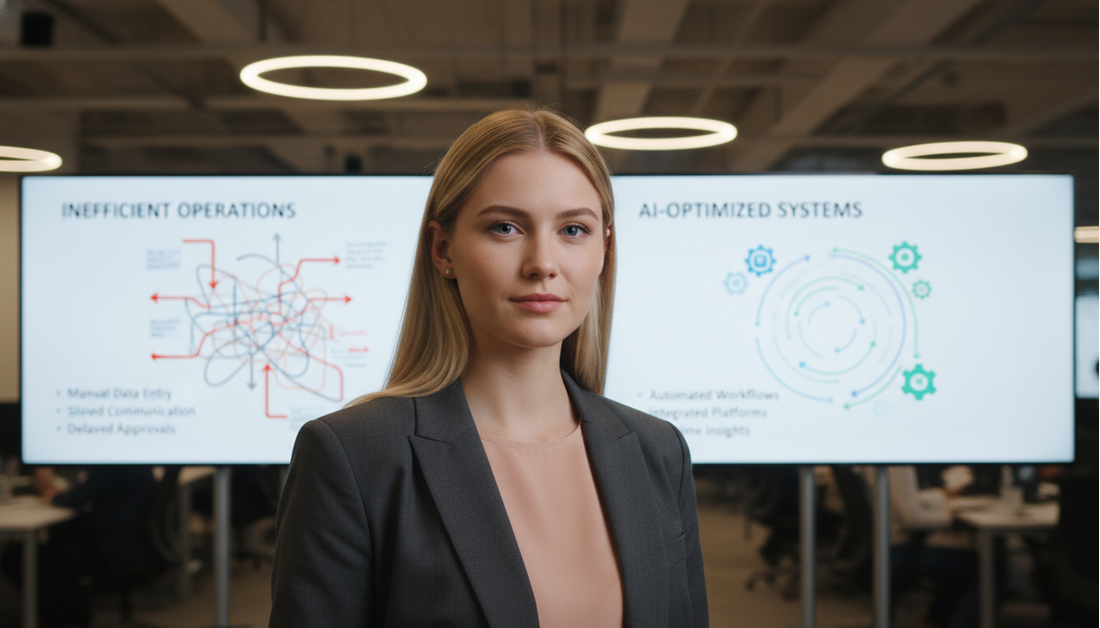
Early adopters of AI technology often experience significant ROI advantages compared to followers. A study by McKinsey found that early adopters can achieve up to 3 times the ROI of their slower-moving counterparts. This disparity is largely due to the ability of early adopters to capture market share, optimize operations, and innovate more rapidly.
Smart Investment Approaches for Closing the Gap
To close the AI efficiency gap, businesses should adopt smart investment approaches that focus on high-impact areas. This includes investing in employee training to develop AI-related skills, adopting cloud-based AI solutions to reduce infrastructure costs, and leveraging AI consulting services to accelerate implementation.
| Investment Area | Early Adopters | Followers |
|---|---|---|
| AI Technology | $1.2M | $800k |
| Training & Development | $500k | $300k |
| Consulting Services | $200k | $100k |
By understanding the financial implications of the AI divide and adopting smart investment strategies, businesses can better position themselves to close the efficiency gap and thrive in an increasingly AI-driven economy.
Practical AI Adoption Strategies for Different Business Sizes
The journey to AI integration varies significantly across different business sizes, requiring customized approaches for success. As organizations navigate the complexities of AI adoption, understanding size-specific strategies becomes crucial for maximizing efficiency and competitiveness.
Enterprise-Level Implementation Roadmaps
For large enterprises, AI adoption requires a comprehensive roadmap that includes assessing current infrastructure, identifying key areas for AI integration, and developing a phased implementation plan. Enterprises should focus on building a robust data foundation and investing in scalable AI solutions.
Mid-Market Company Approaches
Mid-market companies can leverage AI to enhance operational efficiency and drive innovation. Key strategies include adopting cloud-based AI solutions, focusing on specific business processes for automation, and developing in-house AI expertise.
Small Business AI Integration Tactics
Small businesses can benefit from AI by adopting affordable and user-friendly solutions. Key considerations include:
- Identifying simple, high-impact AI applications
- Utilizing cloud-based services for scalability
- Focusing on customer-facing AI solutions
Affordable AI Tools and Solutions
Small businesses can explore affordable AI tools such as chatbots for customer service, predictive analytics for sales forecasting, and automated marketing platforms.
Outsourcing vs. In-House Development
Deciding between outsourcing AI development and building in-house capabilities depends on the company’s resources, expertise, and strategic goals. Outsourcing can provide quick access to AI solutions, while in-house development offers greater control and customization.
Gradual Implementation Frameworks
A gradual implementation framework involves starting with pilot projects, monitoring results, and scaling successful initiatives. This approach helps manage risk and build organizational buy-in.
| Business Size | AI Adoption Strategy | Key Focus Areas |
|---|---|---|
| Enterprise | Comprehensive roadmap | Infrastructure, data foundation, phased implementation |
| Mid-Market | Cloud-based AI solutions | Operational efficiency, process automation, in-house expertise |
| Small Business | Affordable AI tools | Customer-facing solutions, simple applications, scalability |

By adopting these practical AI strategies, businesses of all sizes can enhance their competitiveness and drive growth in 2026.
Workforce Transformation in AI-Driven Organizations
AI-driven organizations are experiencing a workforce transformation that is both challenging and opportunistic. As AI technologies become more prevalent, businesses are recognizing the need to adapt their workforce to maximize the benefits of AI implementation.
Evolving Skill Requirements for 2026
The skills required in the workforce are evolving rapidly. By 2026, proficiency in AI and data analysis will be crucial for professionals across various industries. This shift demands a workforce that is not only tech-savvy but also capable of working alongside AI systems. Key skills include:
- Data interpretation and analysis
- AI and machine learning understanding
- Critical thinking and problem-solving
- Adaptability and continuous learning
Human-AI Collaboration Models
Effective human-AI collaboration is essential for maximizing productivity. Organizations are adopting models that integrate human intelligence with AI capabilities. For instance, AI can handle repetitive tasks, freeing humans to focus on strategic decision-making and creative problem-solving.

Training and Reskilling Strategies
To bridge the skill gap, businesses are investing in comprehensive training and reskilling programs. These initiatives focus on upskilling current employees to work effectively with AI technologies. Strategies include:
- AI literacy programs
- Data analysis and interpretation training
- Cross-functional training to enhance versatility
By embracing these strategies, organizations can ensure a smooth transition to an AI-driven future, enhancing their competitiveness and efficiency.
AI-Powered Workflow Optimization Techniques
AI-powered workflow optimization is revolutionizing the way businesses operate, enabling them to streamline processes and improve productivity. By leveraging advanced AI technologies, companies can now automate routine tasks, enhance decision-making, and tailor their operations to specific business needs.
Process Automation Opportunities
One of the most significant benefits of AI in workflow optimization is process automation. AI can automate repetitive and time-consuming tasks, freeing up human resources for more strategic and creative work. As Forrester notes, “Automation is no longer a nice-to-have; it’s a must-have for businesses looking to stay competitive.”
Decision-Making Enhancement Through AI
AI also plays a crucial role in enhancing decision-making processes. By analyzing vast amounts of data, AI can provide insights that might be missed by human analysts.
“AI-driven decision-making is not about replacing human judgment but augmenting it with data-driven insights.”
This enables businesses to make more informed decisions and respond quickly to changing market conditions.
Customized AI Solutions for Business Functions
Different business functions can benefit from customized AI solutions. Let’s explore some key areas:
Sales and Marketing Intelligence
AI can significantly enhance sales and marketing efforts by providing personalized customer insights and predictive analytics. For instance, AI-powered tools can analyze customer behavior, identify trends, and suggest targeted marketing campaigns.
Supply Chain and Operations Optimization
In supply chain management, AI can optimize inventory levels, predict demand, and streamline logistics.

Customer Experience Personalization
AI enables businesses to offer highly personalized customer experiences. By analyzing customer data, AI can help tailor product recommendations, customer service interactions, and marketing messages to individual preferences.
By embracing AI-powered workflow optimization techniques, businesses can achieve significant improvements in efficiency, productivity, and customer satisfaction. As the landscape continues to evolve, companies that adopt these technologies early will be better positioned to succeed in the competitive market of 2026.
Overcoming AI Implementation Challenges
Overcoming the hurdles associated with AI implementation is crucial for businesses aiming to leverage its full potential. As organizations integrate AI into their operations, they must address various challenges to ensure successful adoption.
Addressing Technical Integration Hurdles
One of the primary challenges businesses face is integrating AI technologies with their existing infrastructure. This requires significant investment in compatible hardware and software, as well as the development of robust data pipelines.
A strategic approach to technical integration involves:
- Conducting thorough compatibility assessments
- Developing customized integration roadmaps
- Investing in scalable infrastructure
Managing Organizational Change and Resistance
AI implementation often necessitates significant organizational changes, which can be met with resistance from employees. Effective change management strategies are essential to mitigate this resistance and ensure a smooth transition.
Ethical Considerations and Regulatory Compliance
Businesses must also navigate the complex landscape of ethical considerations and regulatory requirements surrounding AI. This includes ensuring data privacy, avoiding bias in AI algorithms, and complying with emerging regulations.
| Challenge | Key Considerations | Mitigation Strategies |
|---|---|---|
| Technical Integration | Compatibility, Scalability, Data Quality | Strategic planning, Investment in infrastructure |
| Organizational Change | Employee resistance, Change management | Communication, Training programs |
| Ethical & Regulatory | Data privacy, Algorithm bias, Compliance | Ethical AI frameworks, Regular audits |
By addressing these challenges head-on, businesses can unlock the full potential of AI and drive meaningful transformation across their operations.
Conclusion: Positioning Your Business for Success in the AI Era
As we approach 2026, the AI efficiency gap is reshaping businesses across the United States. To remain competitive, companies must prioritize business transformation through AI adoption. By leveraging AI technologies, businesses can gain a competitive advantage and drive future growth.
To achieve success in the AI era, businesses must focus on developing effective future business strategies that incorporate AI-driven insights and automation. This requires a deep understanding of the AI landscape and its potential applications across various industries.
By positioning for success in the AI era, businesses can unlock new opportunities for growth, improve operational efficiency, and enhance customer experiences. As AI continues to evolve, companies that adapt and innovate will be best positioned to thrive in a rapidly changing business environment.
FAQ
What is the AI efficiency gap, and how is it affecting businesses in 2026?
The AI efficiency gap refers to the disparity in productivity and efficiency between businesses that have adopted AI technologies and those that have not. In 2026, this gap is significantly impacting businesses, with AI leaders experiencing substantial gains in productivity and competitiveness.
How can businesses measure the impact of AI on their productivity?
Businesses can measure the impact of AI on their productivity by tracking key performance indicators (KPIs) such as process automation rates, decision-making speed, and customer satisfaction levels. They can also conduct regular ROI analyses to assess the financial benefits of their AI investments.
What are the most significant challenges to AI adoption, and how can they be overcome?
The most significant challenges to AI adoption include data quality issues, AI talent acquisition and retention, and technology infrastructure requirements. To overcome these challenges, businesses can invest in data quality improvement initiatives, develop AI talent acquisition and retention strategies, and upgrade their technology infrastructure to support AI applications.
How can small businesses adopt AI technologies without breaking the bank?
Small businesses can adopt AI technologies by leveraging affordable AI tools and solutions, such as cloud-based AI platforms and AI-powered software as a service (SaaS) applications. They can also consider outsourcing AI development to third-party providers or adopting gradual implementation frameworks to minimize upfront costs.
What skills will be required for the workforce in 2026, and how can businesses prepare?
In 2026, the workforce will require skills that complement AI, such as critical thinking, creativity, and emotional intelligence. Businesses can prepare by investing in training and reskilling programs that focus on developing these skills, as well as promoting a culture of human-AI collaboration.
How can businesses ensure that their AI adoption strategies are aligned with their overall business goals?
Businesses can ensure that their AI adoption strategies are aligned with their overall business goals by developing a clear understanding of their business objectives and identifying areas where AI can drive the most significant impact. They can then develop tailored AI adoption roadmaps that support their business goals and monitor progress regularly.
What are the key considerations for businesses when implementing AI-powered workflow optimization techniques?
When implementing AI-powered workflow optimization techniques, businesses should consider factors such as process automation opportunities, decision-making enhancement, and customized AI solutions for various business functions. They should also assess the potential impact on their workforce and develop strategies to upskill or reskill employees as needed.
How can businesses address the ethical considerations associated with AI adoption?
Businesses can address the ethical considerations associated with AI adoption by developing clear AI ethics policies, ensuring transparency in AI decision-making, and implementing measures to prevent bias in AI systems. They should also stay up-to-date with regulatory requirements and industry standards related to AI ethics.