



1001 AI Prompts for Schools
Welcome, educators! You are about to embark on a journey to transform your daily classroom experience. We have curated a massive collection of resources designed to help you reclaim your time while elevating the quality of your lessons.
- The Power of AI Prompts for Schools
- Mastering Prompt Engineering for Educators
- AI Prompts for Dynamic Lesson Planning
- Designing Engaging Learning Objectives
- Creating Interactive Lesson Sequences
- Developing Formative Assessment Tools
- Creative Writing and Literacy Prompts
- Sparking Imagination with Generative AI
- Advanced Prompts for Analytical Writing
- Peer Review and Feedback Prompts
- STEM and Scientific Inquiry Prompts
- Simplifying Complex Scientific Concepts
- Prompts for Mathematical Problem Solving
- Encouraging Critical Thinking in Labs
- Inclusive Education and Differentiated Learning
- Student Wellbeing and Social-Emotional Learning
- Administrative Efficiency for School Leaders
- Professional Development and Teacher Growth
- Digital Citizenship and Ethical AI Use
- Leveraging Claude, Gemini, and ChatGPT in the Classroom
- Conclusion
- FAQ
- What exactly are the 1001 AI prompts for schools, and how can they help my classroom?
- Is it easy to integrate ChatGPT for Indian schools within the current CBSE teaching resources 2025 framework?
- Why is prompt engineering for teachers considered a critical skill in the modern era?
- Which platforms should I use—Claude, Gemini for educators, or ChatGPT?
- How can AI prompts for schools support STEM education India?
- Are there specific AI tools for school principals to improve administrative efficiency?
- Does this guide align with the NEP 2020 teaching resources and professional development?
- How can inclusive education AI help me support students with diverse learning needs?
- Can I use AI to support student wellbeing technology and social-emotional learning?
- What are some examples of AI prompts for creative writing that I can use tomorrow?
- How do we handle academic integrity and digital citizenship in schools?
Using these innovative digital tools allows you to focus on what truly matters: your students. By integrating these ai prompts for schools into your workflow, you can easily create personalized learning paths that meet every child where they are.
[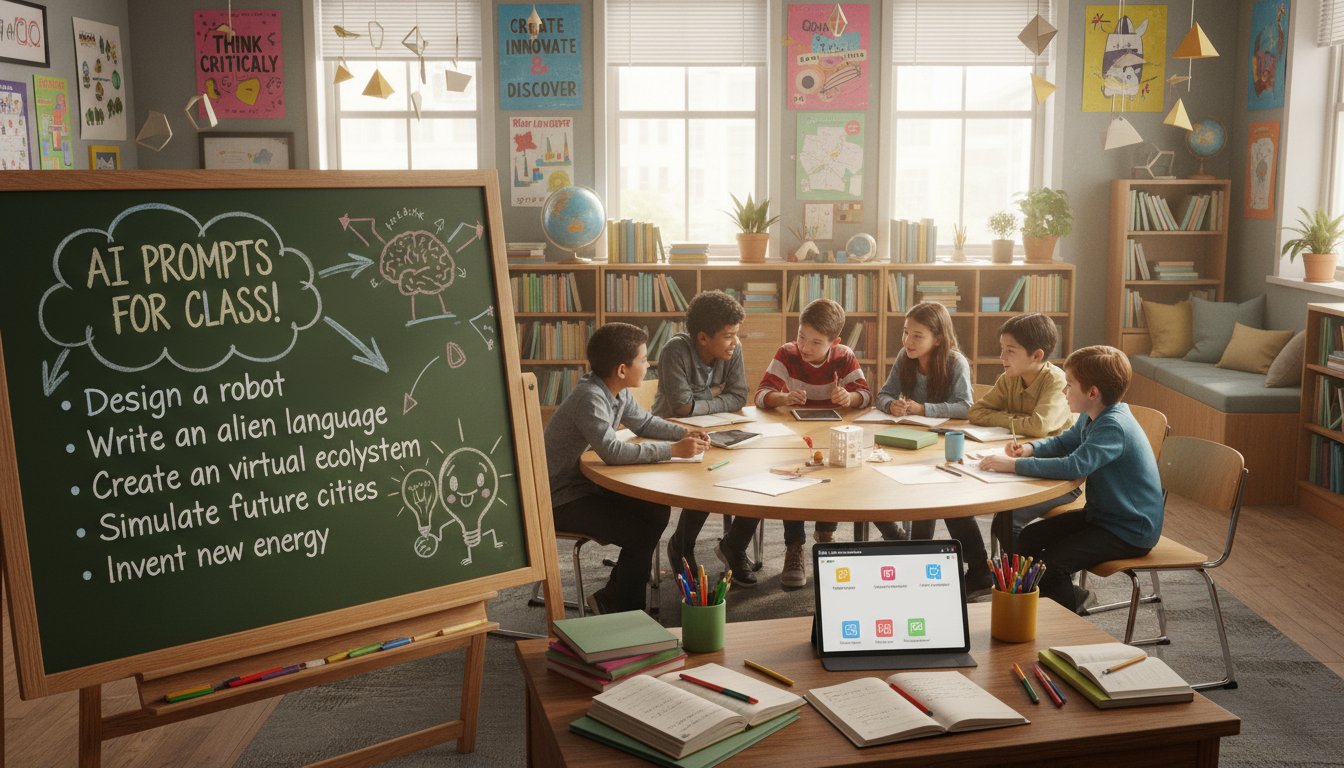 Students brainstorm innovative ideas using AI-powered classroom prompts in a collaborative learning environment.[/caption]
AI Prompts for Schools
Whether you teach elementary or high school, these strategies foster a more interactive environment. You will find that administrative tasks become faster, leaving you more energy to inspire the next generation. Let us explore how these modern solutions can support your teaching goals today.
Key Takeaways
- Discover how to save hours of planning time each week.
- Learn to create highly personalized lessons for diverse learners.
- Boost student engagement through interactive and creative activities.
- Simplify administrative duties to focus on direct instruction.
- Access a vast library of ideas suitable for all grade levels.
The Power of AI Prompts for Schools
Educators are discovering that the secret to effective digital instruction lies in how they communicate with machines. As generative ai education continues to evolve, the classroom environment is becoming more dynamic and responsive to individual student needs. This shift represents a fundamental change in how we approach daily pedagogy.
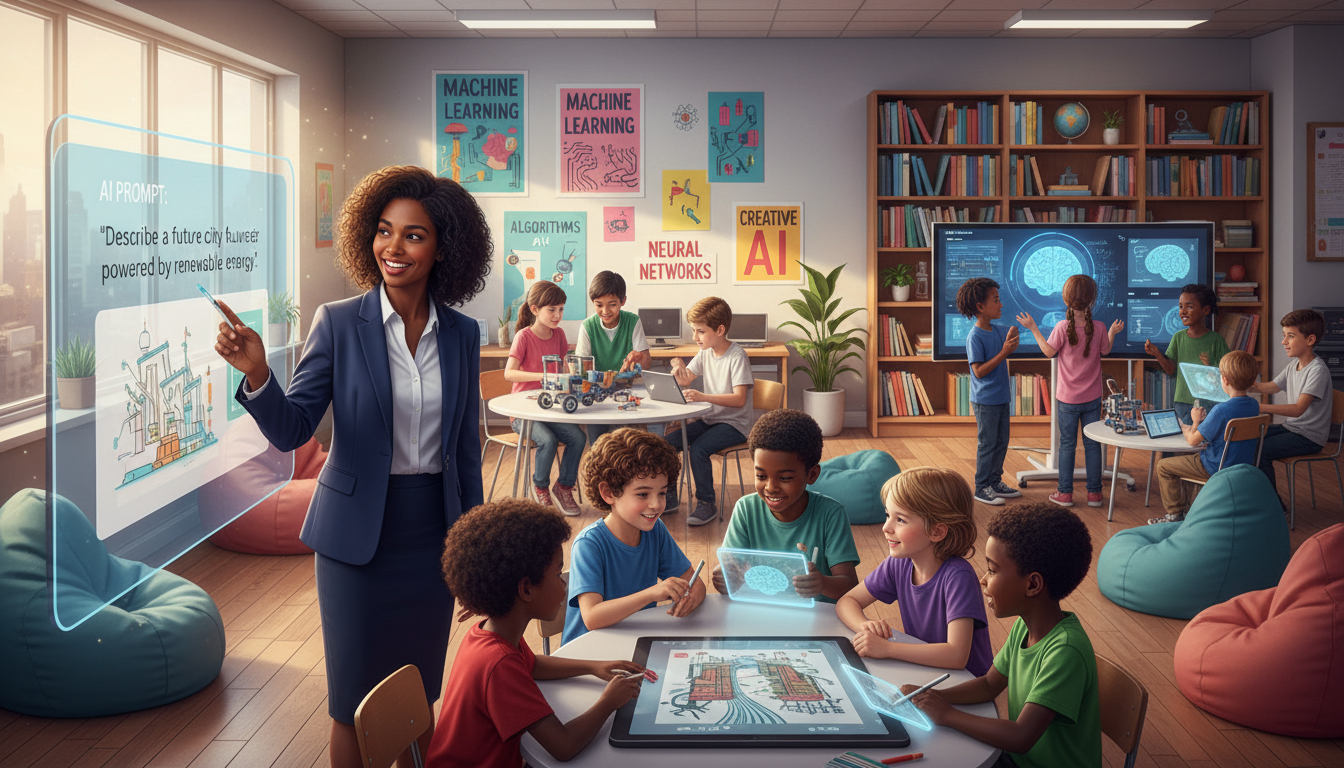
ai prompts for schools
Transforming the Modern Classroom
The integration of artificial intelligence is not just about replacing old tools with new ones. It is about reimagining the entire learning experience to be more interactive and personalized. By leveraging these technologies, teachers can create immersive environments that keep students engaged and curious.
Future-ready instruction requires a blend of traditional wisdom and modern technical literacy. When teachers embrace these tools, they open doors to creative possibilities that were previously impossible to manage at scale. This transition helps students prepare for a world where human-AI collaboration is the norm.
Why Prompt Engineering Matters for Teachers
Understanding the mechanics of ai prompts for schools is a critical skill for any educator looking to maximize their daily efficiency. A well-crafted prompt acts as a bridge between a teacher’s pedagogical goals and the vast capabilities of AI models. Without this skill, the potential of these powerful systems remains largely untapped.
Prompt engineering allows teachers to refine their requests to get precise, high-quality outputs that save time and reduce administrative burdens. By learning how to structure these inputs, educators can ensure that the technology serves their specific classroom objectives. Mastering this art is truly the most effective way to bridge the gap between traditional teaching methods and the future of digital learning.
Mastering Prompt Engineering for Educators
Prompt engineering for teachers is the secret to unlocking the full potential of generative AI in the classroom. By learning how to speak the language of these models, you can turn a simple tool into a highly capable teaching assistant. Consistency and precision are the keys to success when working with these digital platforms.
[ Teachers explore AI-powered educational strategies and automation tools for smarter learning.[/caption]
prompt engineering teachers
The Anatomy of an Effective AI Prompt
To get the best results, you must understand the core components that make up a high-quality request. Educational prompts powered by AI function best when they provide the model with a clear roadmap. You should always aim to include these essential elements in your instructions:
- Persona: Tell the AI who it should act as, such as a “helpful middle school science teacher.”
- Context: Provide background information about your students or the specific lesson topic.
- Task: Clearly define what you want the AI to produce, such as a quiz, a summary, or a lesson plan.
- Constraints: Set boundaries like word count, reading level, or specific formatting requirements.
When you structure your requests this way, you create advanced prompts for students that are tailored to their unique learning needs. This level of detail prevents the AI from providing generic or irrelevant information that does not fit your curriculum.
Iterative Refinement Techniques
Rarely will your first attempt at a prompt yield the perfect result. Instead, view your interaction with the AI as a collaborative conversation that requires fine-tuning. If the output is not quite right, do not hesitate to adjust your input.
Try these strategies to improve your results:
- Ask for revisions: If the tone is too formal, ask the AI to rewrite the content in a more conversational style.
- Add specific examples: Providing a sample of the desired output helps the model understand your expectations.
- Break down complex tasks: If you are creating advanced prompts for students, ask the AI to complete the task in smaller, manageable steps.
By treating prompt engineering for teachers as an ongoing process, you ensure that your educational prompts powered by AI remain accurate and helpful. This iterative approach allows you to maintain control over the technology while saving valuable time on administrative and planning tasks.
AI Prompts for Dynamic Lesson Planning
Leveraging artificial intelligence allows teachers to reclaim their time while enhancing the quality of their instruction. By using smart prompts, you can generate comprehensive lesson frameworks that cater to diverse student needs. This shift helps educators focus on meaningful student interaction rather than repetitive administrative tasks.
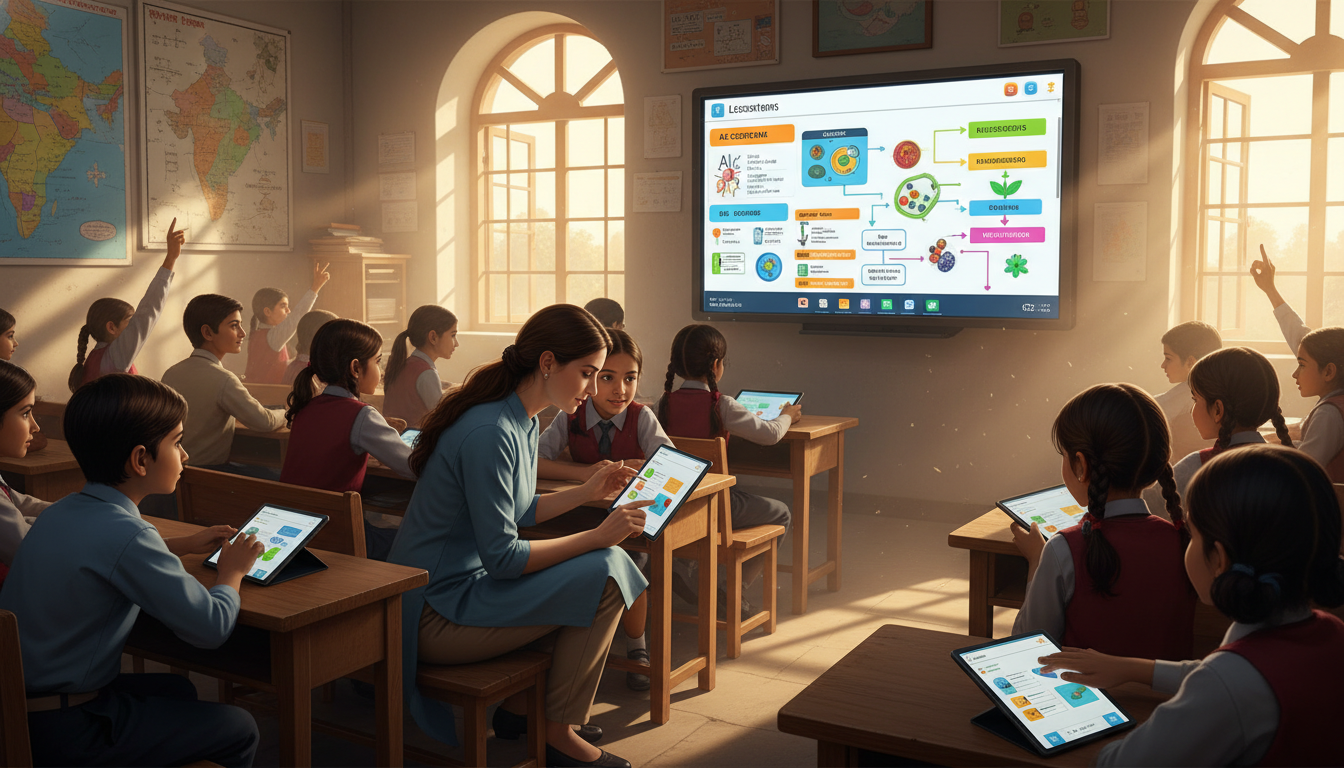 Students engage with digital lessons and AI-assisted classroom activities on interactive devices.[/caption]
ai lesson planning india
Designing Engaging Learning Objectives
Clear objectives serve as the foundation for any successful classroom experience. When you use AI to draft these goals, you ensure they align perfectly with modern benchmarks, such as the latest cbse teaching resources 2025. Precision in language helps students understand exactly what they need to achieve by the end of the session.
You can prompt the AI to create objectives that are measurable and student-centered. By specifying the grade level and subject, the tool generates targets that challenge students appropriately. This ensures that every lesson maintains high academic rigor while remaining accessible to all learners.
Creating Interactive Lesson Sequences
A dynamic lesson sequence keeps students focused and excited about the material. AI can suggest creative transitions, hands-on activities, and collaborative group work that break up long lectures. These structured sequences help maintain a high level of engagement throughout the entire period.
Many educators in regions like South Asia are already adopting ai lesson planning india strategies to modernize their classrooms. By inputting your core topic, the AI can outline a step-by-step flow that includes warm-ups, core instruction, and closing activities. This structured approach saves hours of preparation time each week.
Developing Formative Assessment Tools
Formative assessments provide the immediate feedback necessary to guide your teaching in real-time. AI tools can quickly generate exit tickets, short quizzes, or reflection prompts that test student understanding instantly. These tools allow you to identify knowledge gaps before moving on to new concepts.
Tracking student progress becomes much simpler when you have data-driven insights at your fingertips. You can use AI to create rubrics that help students self-assess their own work. This empowers learners to take ownership of their academic journey and fosters a culture of continuous improvement.
Creative Writing and Literacy Prompts
Unlock your students’ potential with creative writing prompts designed for the digital age. By integrating artificial intelligence writing prompts into your daily curriculum, you can bridge the gap between traditional storytelling and modern technology. These tools provide a unique foundation for students to explore their voices while building essential literacy skills.

artificial intelligence writing prompts
Sparking Imagination with Generative AI
Getting students past the “blank page” syndrome is often the hardest part of a writing lesson. Using ai-generated prompts for students allows teachers to provide instant, tailored inspiration that matches specific interests or genre requirements. These innovative writing prompts for schools can be adjusted in real-time to challenge students at every level.
Consider these benefits of using ai prompts for creative writing:
- Instant generation of unique story starters and plot twists.
- Customizable difficulty levels for diverse learners.
- Support for world-building and character development exercises.
Advanced Prompts for Analytical Writing
Moving beyond creative expression, AI serves as a powerful partner for structured, analytical tasks. Teachers can implement ai-driven writing activities for schools that require students to synthesize information, compare arguments, and cite evidence effectively. These prompts act as a scaffold, guiding students through the logic required for high-level academic essays.
“The goal of technology in the classroom is not to replace the writer, but to provide the structure that allows the writer to think more deeply about their own ideas.”
When students use these prompts, they learn to break down complex texts into manageable parts. This process helps them identify themes and develop stronger thesis statements. It turns the daunting task of analysis into a collaborative exploration of ideas.
Peer Review and Feedback Prompts
One of the most effective ways to improve writing is through consistent, constructive feedback. By utilizing technology-enhanced writing prompts, educators can create frameworks that help students evaluate their peers’ work with precision. These prompts provide specific criteria for assessment, ensuring that feedback remains focused and actionable.
Students can use these AI-assisted frameworks to:
- Identify areas where evidence is missing or weak.
- Check for clarity in thesis statements and topic sentences.
- Refine transitions between paragraphs to improve flow.
This approach empowers students to take ownership of their revision process. By engaging in meaningful peer review, they develop a better understanding of their own writing habits and the importance of clear communication.
STEM and Scientific Inquiry Prompts
Teachers can now use AI to make abstract scientific theories feel tangible and exciting for every student. By leveraging these digital tools, educators are finding new ways to bridge the gap between textbook theory and real-world application. This approach is gaining traction globally, including in the growing landscape of stem education india, where interactive learning is becoming a priority.

stem education india
Simplifying Complex Scientific Concepts
Generative AI acts as a personal tutor that can break down dense scientific jargon into digestible explanations. When students struggle with topics like quantum mechanics or cellular respiration, AI can provide analogies that relate to their daily lives. This helps students visualize abstract concepts more effectively, leading to higher engagement levels.
For example, a teacher might prompt an AI to “Explain the process of photosynthesis as if you were describing a solar-powered factory to a middle school student.” This simple shift in perspective makes the material far more accessible. Clear communication is the foundation of scientific literacy.
Prompts for Mathematical Problem Solving
Mathematics often requires a step-by-step approach to build confidence and mastery. AI tools can guide students through complex equations by offering hints rather than just providing the final answer. This encourages students to think through the logic of each step independently.
Educators can utilize specific machine learning prompts for education to generate unique practice problems tailored to a student’s current skill level. By adjusting the difficulty, teachers ensure that no student feels left behind or bored. This iterative process helps students develop a stronger mathematical foundation over time.
Encouraging Critical Thinking in Labs
Laboratory experiments provide the perfect environment for students to practice scientific inquiry. AI can assist by prompting students to form hypotheses, predict outcomes, and analyze data sets after an experiment is complete. Instead of just following a recipe, students learn to evaluate their findings critically.
Teachers can ask students to use AI to compare their experimental results with established scientific models. This encourages a deeper interest in STEM fields by showing how data informs our understanding of the world. Critical thinking is the ultimate goal of any successful science curriculum.
Inclusive Education and Differentiated Learning
Inclusive education ai is transforming how teachers support students with diverse learning needs. By leveraging smart technology, educators can create a classroom where every student feels valued and capable of success. This approach ensures that curriculum materials are accessible to everyone, regardless of their starting point.
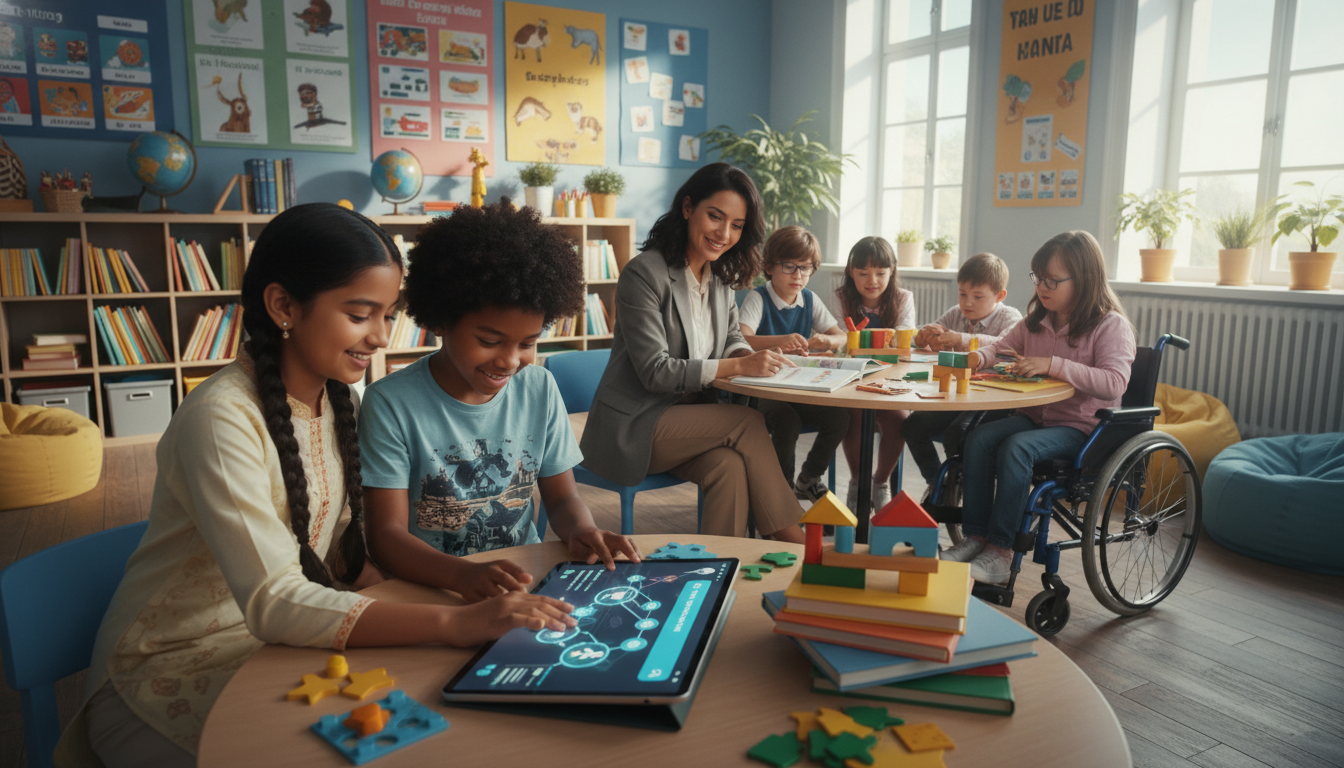
inclusive education ai
Adapting Content for Diverse Learners
Teachers often struggle to balance the needs of thirty students at once. AI tools act as a powerful assistant by instantly adjusting the complexity of reading passages or lesson instructions. You can prompt an AI to rewrite a complex scientific article at a third-grade reading level or generate a summary with bullet points for students who need extra clarity.
These tools also help in creating visual aids or simplified vocabulary lists for English language learners. By using inclusive education ai, you can provide multiple versions of the same lesson, ensuring that no student is left behind due to language barriers or learning disabilities.
Prompts for Individualized Education Programs
Drafting effective Individualized Education Programs (IEPs) requires significant time and careful observation. AI can streamline this process by helping you draft measurable goals based on specific student data. You can input a student’s current performance levels and ask the AI to suggest differentiated strategies or accommodations that align with their unique profile.
The following table outlines how AI can assist in common differentiation tasks to support your classroom goals:
| Task | Traditional Method | AI-Enhanced Method |
| Reading Level Adjustment | Manual rewriting | Instant text simplification |
| IEP Goal Drafting | Writing from scratch | Data-driven goal generation |
| Visual Support | Searching for images | Generating custom diagrams |
| Assessment Design | Standardized testing | Personalized quiz creation |
Using these prompts allows you to focus more on meaningful student interaction rather than administrative paperwork. When you integrate inclusive education ai into your daily workflow, you build a more equitable environment where every learner has the tools they need to thrive.
Student Wellbeing and Social-Emotional Learning
Cultivating a healthy school culture requires intentional focus on the emotional needs of every learner. By leveraging student wellbeing technology, educators can create safe spaces where students feel heard and understood. These digital tools act as a bridge, helping children navigate their complex feelings in an increasingly fast-paced world.
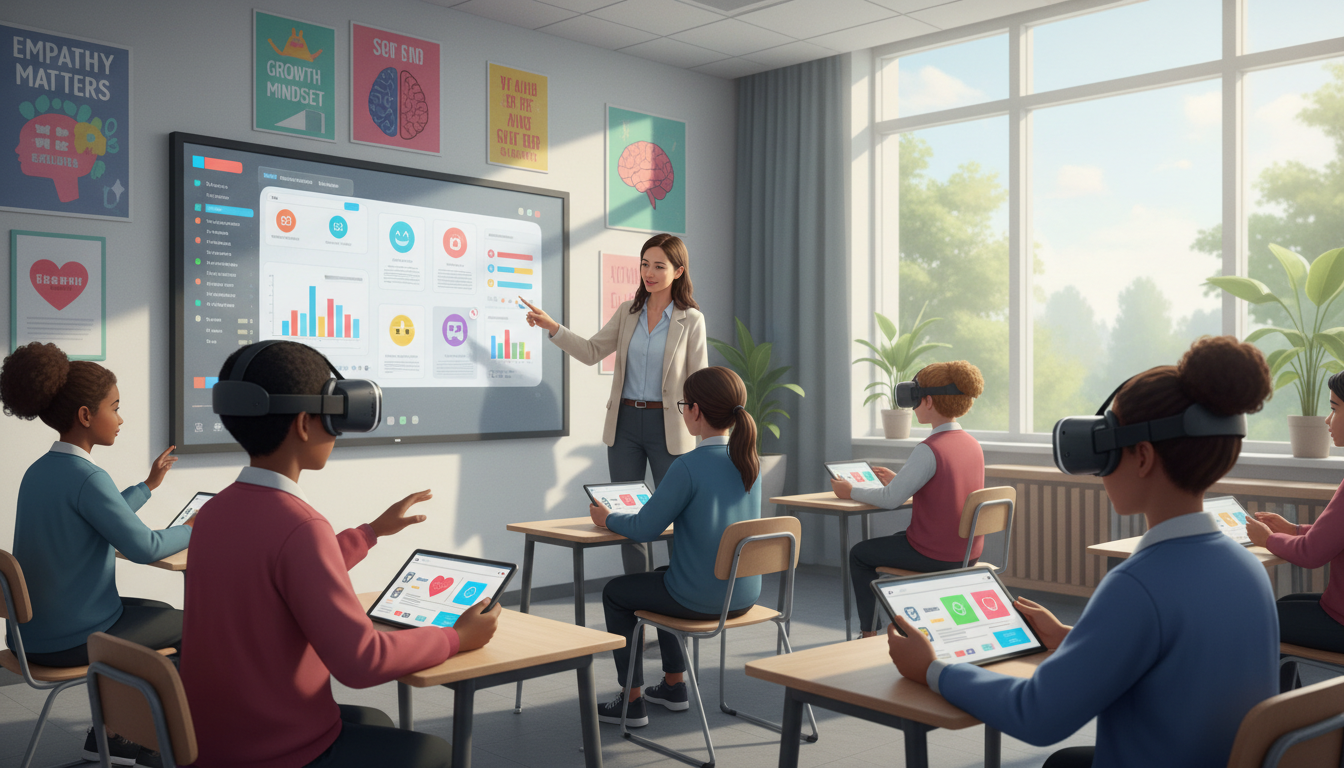
student wellbeing technology
Prompts for Reflective Journaling
Reflective journaling is a powerful practice that helps students develop self-awareness and emotional regulation. When students write about their daily experiences, they learn to identify triggers and celebrate small victories. AI-driven platforms can provide personalized prompts that adapt to the specific emotional state of the student.
Consider using these prompts to encourage deeper reflection:
- What is one challenge you faced today, and how did you handle it?
- Describe a moment this week when you felt truly proud of your effort.
- If you could change one thing about your day to make it more peaceful, what would it be?
Building Empathy and Community
Fostering a supportive digital environment is essential for building empathy among peers. When students engage in collaborative exercises, they learn to appreciate diverse perspectives and build stronger social bonds. Student wellbeing technology allows teachers to facilitate these connections even in hybrid or remote settings.
“Empathy is the foundation of a thriving classroom community where every student feels safe to grow and learn.”
To strengthen your school community, try implementing these interactive prompts:
- Share a story about a time someone showed you kindness.
- How can we support a classmate who is having a difficult week?
- What are three qualities that make our classroom a welcoming place for everyone?
By consistently using these strategies, teachers can ensure that emotional health remains a priority. Integrating these practices helps students build the resilience they need to succeed both inside and outside the classroom.
Administrative Efficiency for School Leaders
Modern school administration requires a shift toward smarter, technology-driven workflows to reclaim valuable time. Principals often face a constant influx of emails, reports, and scheduling demands that pull them away from student-centered initiatives. By adopting new digital strategies, leadership teams can simplify these repetitive tasks and focus on what truly matters.

ai tools for school principals
Streamlining Communication and Documentation
Effective communication is the backbone of a successful school environment. Many ai tools for school principals now allow for the rapid drafting of newsletters, parent updates, and staff memos. These systems ensure that your tone remains professional while significantly reducing the time spent on manual writing.
Beyond drafting, these platforms help organize complex documentation. You can use AI to summarize long meeting transcripts or categorize digital files automatically. This organizational boost ensures that critical information is always accessible when you need it most.
AI Tools for School Policy Development
Developing school policies often involves reviewing extensive legal documents and district guidelines. Using school administration ai tools, leaders can quickly synthesize large volumes of text to identify key requirements and potential gaps. This process helps in drafting clear, compliant policies that reflect the specific needs of your school community.
Integrating school leadership technology into your workflow fosters a more proactive approach to governance. It allows you to model different policy scenarios and predict their impact on staff and students. By leveraging these insights, you can make data-informed decisions that strengthen the entire educational institution.
| Administrative Task | Traditional Method | AI-Enhanced Approach |
| Drafting Memos | Manual writing | Automated generation |
| Policy Review | Manual reading | Instant summarization |
| Data Organization | Spreadsheet entry | Intelligent categorization |
| Meeting Notes | Handwritten logs | Real-time transcription |
Professional Development and Teacher Growth
Modern educators can leverage artificial intelligence to unlock new levels of personal and professional development. By integrating smart technology into your daily routine, you can transform how you evaluate your teaching methods and interact with peers. This shift is essential for staying relevant in a rapidly changing academic landscape.
Self-Reflection Prompts for Educators
Self-reflection is a powerful tool for any teacher looking to refine their craft. You can use AI to generate prompts that challenge your assumptions and highlight areas for improvement. These tools act as a digital mirror, helping you align your classroom practices with modern standards like nep 2020 teaching resources.
Try asking an AI to analyze your lesson outcomes or suggest ways to improve student engagement. By reviewing these insights, you can create a more inclusive and effective learning environment. This process ensures that your teaching remains dynamic and responsive to student needs.
Collaborative Planning and Mentorship
The rise of artificial intelligence education india initiatives has made it easier than ever to connect with other educators. AI platforms allow you to share lesson plans, exchange feedback, and build a supportive professional community. This collaborative approach is vital for teacher professional development india, as it fosters a culture of shared knowledge.
Mentorship programs can also benefit from AI-driven scheduling and resource matching. By using these tools, you can find mentors who align with your specific goals and teaching style. This creates a stronger network of support that benefits both new and experienced teachers alike.
| Strategy | Primary Benefit | AI Application |
| Self-Reflection | Personal Growth | Prompt-based analysis |
| Collaborative Planning | Resource Sharing | Shared digital workspaces |
| Mentorship | Skill Development | Automated mentor matching |
Digital Citizenship and Ethical AI Use
As artificial intelligence becomes a staple in modern classrooms, the need for robust digital citizenship schools programs has never been more urgent. Educators are now tasked with guiding students through a landscape where information is generated at lightning speed. By fostering a culture of responsibility, we ensure that technology serves as a bridge to knowledge rather than a shortcut to academic dishonesty.
Teaching Students About AI Literacy
AI literacy goes beyond knowing how to prompt a chatbot for answers. It involves teaching students to critically evaluate the output they receive from machine learning models. Students must learn to identify potential biases, hallucinations, and the limitations of the data sets used by these tools.
When students understand the mechanics behind generative AI, they become more empowered users. We should encourage them to ask questions about where information originates and why a specific response was generated. This critical awareness is the cornerstone of modern digital citizenship.
Navigating Academic Integrity
The rise of AI tools has forced a necessary conversation about what constitutes original work. Schools must establish clear guidelines that define the boundary between using AI as a brainstorming partner and using it to bypass the learning process. Transparency is key to maintaining trust between teachers and students.
Educators can help students navigate this by modeling ethical citation practices. When a student uses AI to outline an essay or generate code, they should be encouraged to document that process openly. This shift moves the focus from policing technology to promoting honest academic growth.
| Behavior | Ethical Approach | Risky Practice |
| Brainstorming | Using AI to generate topic ideas | Copying AI-generated essay drafts |
| Editing | Using AI for grammar suggestions | Replacing original voice with AI text |
| Research | Verifying AI facts with primary sources | Trusting AI outputs without checking |
| Coding | Using AI to debug logic errors | Submitting AI-generated code as own |
Ultimately, the goal of digital citizenship schools is to prepare students for a world where AI is ubiquitous. By embedding these ethical standards into our daily curriculum, we equip learners with the integrity needed to succeed in the digital age. Responsible use is not just a rule to follow; it is a vital skill for the future.
Leveraging Claude, Gemini, and ChatGPT in the Classroom
The rapid evolution of AI tools offers exciting possibilities for classroom innovation in 2025. As technology becomes more integrated into daily lessons, teachers must understand which platforms best support their specific instructional goals.
Comparing AI Capabilities for Education
Each major AI platform brings unique strengths to the educational landscape. While ChatGPT remains a popular choice for chatgpt for indian schools, other platforms offer distinct advantages for different types of academic tasks.
The following table highlights how these tools differ in their primary functions:
| Platform | Primary Strength | Best Use Case |
| ChatGPT | Versatility | Lesson planning and brainstorming |
| Claude | Nuanced Writing | Long-form content and analysis |
| Gemini | Real-time Data | Research and current events |
Choosing the Right Tool for the Task
Selecting the right assistant is a vital step for claude gemini for educators who want to save time. When evaluating these tools, consider the specific needs of your curriculum and the digital infrastructure available in your region.
As we look toward the future of edtech india 2025, keep these tips in mind for selecting your AI partner:
- Assess your primary goal: Are you looking for creative writing support or data-driven research?
- Test for accessibility: Ensure the platform works smoothly on your school’s existing hardware.
- Prioritize safety: Always review the privacy policies of the AI provider before introducing them to students.
By matching the tool to the task, you can significantly enhance your instructional effectiveness. Experimenting with these platforms will help you discover which one feels most natural for your unique teaching style.
Conclusion
Integrating artificial intelligence into your daily teaching routine marks a significant shift in modern education. Tools like OpenAI ChatGPT, Google Gemini, and Anthropic Claude offer powerful ways to enhance your instructional impact. These resources serve as partners in your mission to inspire students every single day.
True success relies on your unique ability to blend advanced technology with human-centered pedagogy. Your expertise remains the heartbeat of the classroom. AI serves to amplify your natural talents rather than replace the vital connections you build with learners.
Start your journey by testing one small prompt during your next planning session. Experimentation allows you to discover what works best for your specific subject area and student needs. Small steps lead to meaningful changes in efficiency and creative output.
Stay curious as you explore these digital landscapes. Your commitment to growth ensures that schools remain vibrant spaces for discovery. Keep refining your approach to create a more engaging and supportive environment for every student in your care.