
Are You Preparing for MUN the Wrong Way?
Have you ever wondered if your study routine is actually holding you back? Many students struggle because they rely on outdated methods that fail to address the high-intensity nature of modern conferences.
- The Evolution of Model United Nations Preparation
- Why You Need MUN Preparation AI Prompts to Stay Competitive
- Meet the Author: Yogesh Vaidya and His Vision for MUN
- Understanding the Four-Field Prompt Format
- Mastering Research and Position Papers with AI
- Advanced Coalition Building and Resolution Drafting
- Navigating Crisis Committees and Security Council Simulations
- Deep Dive into AIPPM: All India Political Parties Meet
- Adapting to International Circuits: From Harvard to NMUN
- How to Use AI for Diplomatic Protocol and Speech Writing
- Purchasing Options and Getting Started with the Guide
- Conclusion
- FAQ
- Why is model united nations preparation changing, and how can I stay ahead?
- How can I use mun preparation ai prompts to improve my delegate performance?
- What is the most effective way to write a mun position paper that stands out?
- How to win best delegate at mun using AI-driven strategies?
- What are the best mun conference resources for major simulations like Harvard or NMUN?
- How do I navigate the unique challenges of a virtual mun simulation?
- Can you provide advice on how to build a coalition in mun effectively?
- Is there a specific guide on how to prepare for aippm?
- How does mun speech writing support help me maintain diplomatic protocol?
- I am moving into a leadership role; how to chair a mun committee successfully?
Inadequate research is a major error that often leads to poor representation of your assigned country. If you want to succeed, you must learn how to prepare for model united nations with a fresh perspective.
MUN preparation AI prompts
By shifting your focus toward modern tools, you can easily avoid common pitfalls. We will introduce you to a revolutionary resource that changes how you approach your diplomatic strategy. Utilizing mun preparation ai prompts allows you to streamline your workflow and gain a competitive edge over your peers.
Key Takeaways
- Identify why traditional study methods often fail in high-intensity settings.
- Understand the risks of inadequate research during your conference cycle.
- Learn to pivot toward smarter, more efficient diplomatic strategies.
- Discover how modern technology can enhance your overall performance.
- Master the art of representing your country with confidence and accuracy.
The Evolution of Model United Nations Preparation
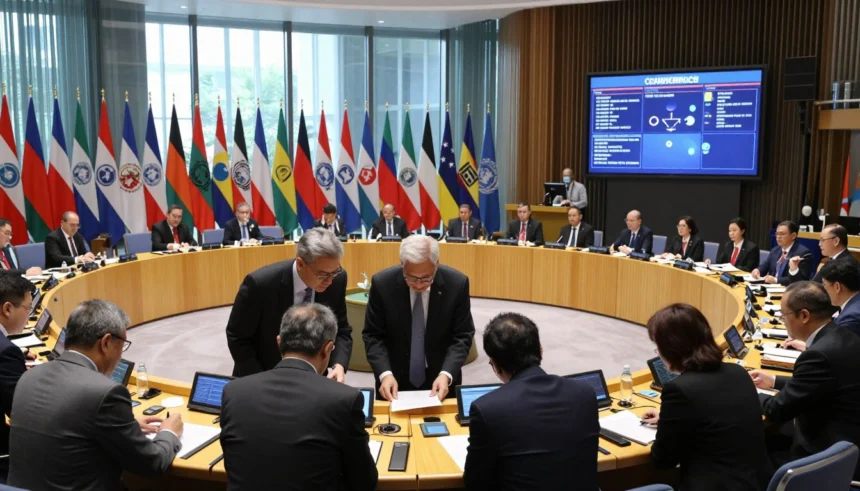
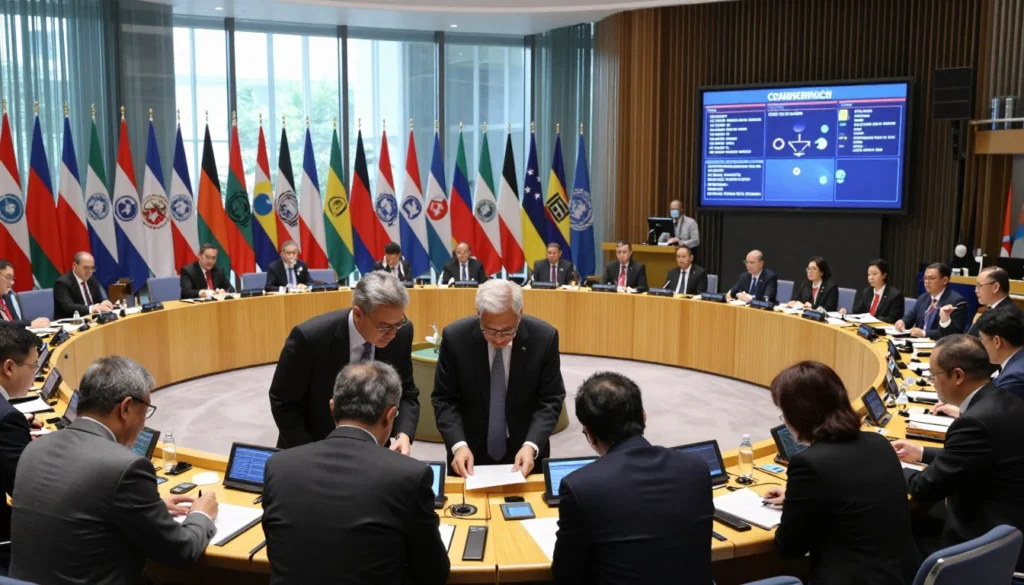
If you are still relying on outdated methods for your model united nations preparation, you might be falling behind. The landscape of these simulations has shifted significantly as conferences move toward more complex, fast-paced environments. Today, success requires a dynamic understanding of global perspectives rather than just static research.
Failure to be inclusive often leads to closed-minded approaches that can ultimately hinder your ability to pass resolutions. When you ignore diverse viewpoints, you limit your capacity to build the coalitions necessary for victory. Modern delegates must embrace a more sophisticated, tech-integrated approach to their journey to remain competitive.
model united nations preparation
The following table highlights the key differences between the old-school methods and the modern standards required for success in today’s circuit.
| Feature | Traditional Approach | Modern Strategy |
| Research Method | Static, printed documents | AI-driven, real-time data |
| Negotiation Style | Rigid and individualistic | Inclusive and collaborative |
| Preparation Focus | Memorization of facts | Strategic model united nations preparation |
| Outcome Goal | Winning through dominance | Winning through consensus |
By shifting your focus toward inclusive negotiation, you position yourself as a leader in the committee. Embracing these changes ensures that your preparation is not only efficient but also highly effective in high-stakes environments.
Why You Need MUN Preparation AI Prompts to Stay Competitive
The landscape of competitive debating is shifting rapidly, and your preparation strategy needs to evolve with it. In a circuit where every detail counts, relying solely on manual research can leave you at a significant disadvantage. To secure those top awards, you must integrate modern solutions into your workflow.
This is where mun preparation ai prompts become your most valuable asset. By utilizing structured inputs, you can drastically reduce the time spent on initial research while increasing the depth of your analysis. These prompts act as a catalyst, helping you organize complex geopolitical data into actionable insights.
mun preparation ai prompts
The book “1001 AI Prompts for MUN” by Yogesh Vaidya, PhD (Honoris Causa), serves as a comprehensive toolkit for delegates, chairs, and faculty advisors. It provides a roadmap for navigating the complexities of international relations through advanced ai tools for mun. These resources allow you to simulate committee environments and test your arguments before you even step into the room.
“True diplomacy in the modern age is not just about the strength of your voice, but the precision of your data and the speed of your strategic adaptation.”
When you leverage these resources, you gain access to instant mun debate assistance that was previously unavailable to the average delegate. Whether you are drafting a position paper or preparing for a moderated caucus, having a structured AI partner ensures your points remain logical and persuasive. This level of support allows you to focus on your public speaking and negotiation skills.
Ultimately, embracing technology in mun training is no longer optional for those aiming for excellence. By adopting these digital workflows, you transform your preparation from a chore into a competitive advantage. Start refining your approach today to ensure you remain a formidable force in every committee you join.
Meet the Author: Yogesh Vaidya and His Vision for MUN
Meet Yogesh Vaidya, the mind behind the comprehensive guide designed to elevate your Model United Nations journey. As a recipient of a PhD (Honoris Causa) from the University of Maryland, USA, he brings a wealth of academic and practical expertise to the global MUN community. His work is rooted in a deep understanding of the complexities you face during intense committee simulations.
His latest publication, “1001 AI Prompts for MUN: For Delegates, Chairs, Crisis Directors, Faculty Advisors and MUN Coaches Worldwide,” serves as a universal resource for everyone involved in the circuit. The book is meticulously crafted to provide you with 1,001 ready-to-use AI prompts. These tools span 30 distinct sections, ensuring that every dimension of your participation is covered with precision and ease.
The vision behind this project is to democratize access to high-level preparation strategies. Whether you are a first-time delegate or a seasoned faculty advisor, these prompts are designed to streamline your workflow and sharpen your diplomatic edge. By integrating artificial intelligence into your routine, you can focus more on the art of debate and less on the mechanics of research.
Yogesh Vaidya remains deeply committed to transforming the MUN experience through constant innovation. He believes that by leveraging technology, you can unlock new levels of creativity and efficiency in your resolutions. This guide is more than just a collection of prompts; it is a roadmap for your success in the ever-evolving world of international diplomacy.
Understanding the Four-Field Prompt Format
Learning how to use ai for mun preparation starts with organizing your thoughts into a clear, actionable framework. The most effective way to interact with artificial intelligence is to follow a consistent, four-part structure. This method ensures that your results are always relevant, accurate, and ready for the committee floor.
By breaking down your requests into specific fields, you remove the guesswork from your research. This structured approach allows you to maintain a high level of quality across all your documents, from position papers to opening speeches.
how to use ai for mun preparation
Breaking Down Use Cases and AI Prompts
Every successful interaction begins by defining the Use Case and the AI Prompt. The Use Case identifies exactly what you need, such as drafting a resolution clause or summarizing a complex treaty. Once the goal is clear, the AI Prompt provides the specific instructions needed to generate the desired output.
When you master how to use ai for mun preparation, you learn to write prompts that act as a roadmap for the machine. Instead of vague requests, you provide context, tone, and specific constraints. This precision helps the AI produce content that sounds like a professional diplomat rather than a generic search engine.
Leveraging Delegate Insights and Customization Tips
The final two fields, Delegate Insight and Customization Tip, are where you add your personal touch. Delegate Insights provide the strategic context that only a human can offer, such as identifying potential alliances or predicting opposition arguments. Customization Tips allow you to refine the output to match your country’s specific foreign policy and committee stance.
Using these fields effectively allows you to:
- Align with national interests by injecting specific policy nuances into every draft.
- Save valuable time by automating the repetitive parts of your research process.
- Enhance your credibility by ensuring your speeches reflect deep, committee-specific knowledge.
By consistently applying this four-field format, you turn AI into a powerful partner in your diplomatic journey. You will find that your preparation becomes more efficient, allowing you to focus on the human elements of debate and coalition building.
Mastering Research and Position Papers with AI
If you want to impress your chair, you need a strategy that turns raw data into a compelling narrative. Writing a position paper is often the most intimidating part of the pre-conference phase for many delegates. However, you can simplify this process by focusing on your unique country stance rather than just listing facts.
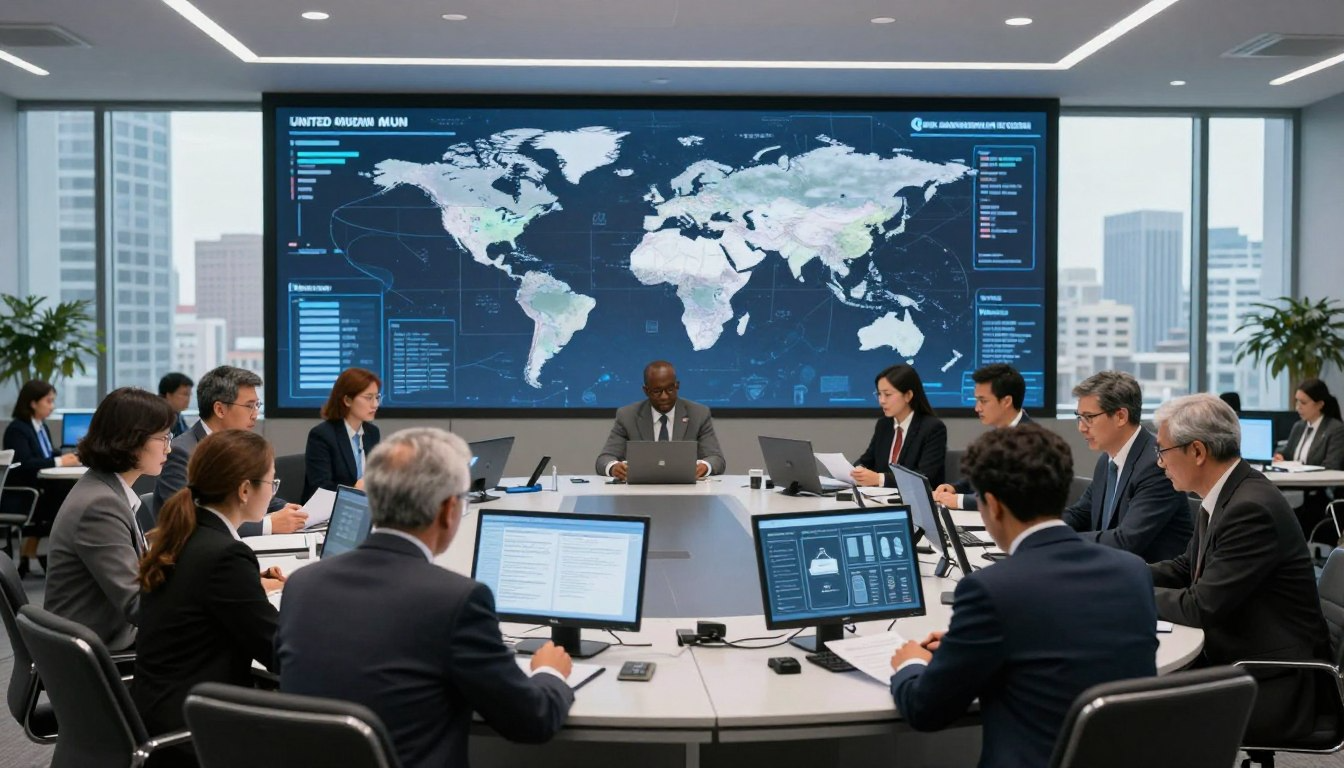
You can utilize ai-guided mun research to synthesize complex geopolitical data into clear, persuasive arguments. Instead of drowning in endless reports, these tools help you extract the most relevant information for your specific committee goals. This allows you to spend more time refining your policy proposals and less time searching for basic statistics.
ai-guided mun research
When learning how to write a mun position paper, remember that your goal is to present a clear, logical flow of ideas. Start by identifying the core issues, then use AI to organize your research into a structured format that highlights your country’s perspective. Consistency is key when you are trying to build a strong reputation in the room.
Finding a strong narrative is essential, especially when you move into unmoderated caucuses. If your position paper clearly defines your country’s objectives, other delegates will find it much easier to align with your bloc. Strategic alignment ensures that your research is not just thorough, but also highly effective during intense negotiations.
By leveraging these modern tools, you ensure your preparation is both efficient and impactful. You will find that a well-researched paper acts as a roadmap for your entire conference experience. Stay focused on your narrative, and you will surely stand out to your committee chair.
Advanced Coalition Building and Resolution Drafting
If you want to master the art of diplomacy, you must learn how to build a coalition in MUN effectively. Many delegates view the committee room as a battlefield, but the most successful representatives treat it as a space for collaboration. Building a coalition is the heartbeat of any successful resolution, yet many delegates struggle to navigate the social dynamics involved.
how to build a coalition in mun
You can use AI tools to identify potential allies by analyzing their national interests and voting patterns. By inputting your country’s stance, you can ask the AI to suggest partners who share similar goals. This strategic alignment ensures that your resolution gains traction early in the session.
“Diplomacy is the art of letting someone else have your way.”
It is vital to remember that being aggressive ruins diplomatic reputation. When you force your ideas on others, you alienate potential supporters and create unnecessary friction. Instead, focus on collaborative drafting to ensure your resolution is both technically sound and politically viable.
Learning how to build a coalition in MUN requires patience and active listening. Use AI to draft language that appeals to diverse national interests, making your proposals more inclusive. This approach leads to more sustainable outcomes that satisfy a broader range of delegates.
| Strategy | Approach | Outcome |
| Aggressive | Demanding compliance | Damaged reputation |
| Collaborative | Seeking consensus | Sustainable resolution |
| AI-Assisted | Data-driven outreach | Stronger alliances |
By mastering these techniques, you will find that how to build a coalition in MUN becomes a natural part of your workflow. Always prioritize long-term relationships over short-term gains to maintain your influence throughout the conference.
Navigating Crisis Committees and Security Council Simulations
In a virtual mun simulation, your ability to handle sudden updates determines your success. These fast-paced environments require you to think on your feet while managing the unique constraints of an online platform. Adaptability is your greatest asset when the committee flow shifts unexpectedly.
Online conferences often present technical hurdles that can disrupt your momentum. You must ensure your internet connection is stable and your communication tools are ready for instant use. When a crisis update hits, having a pre-planned strategy allows you to focus on the diplomatic response rather than troubleshooting software issues.
You can leverage AI to generate rapid-response strategies that keep you ahead of the curve. By inputting the latest committee developments into your AI tools, you receive structured arguments that address the crisis immediately. This approach helps you maintain your composure during a virtual mun simulation, even when the geopolitical landscape changes in seconds.
virtual mun simulation
Handling complex procedural hurdles is another critical skill for high-level delegates. Whether you face a sudden security threat or a procedural deadlock, your preparation must be flexible. Use the following table to compare how different approaches impact your performance in a high-pressure setting.
| Strategy Type | Primary Focus | AI Integration Level | Outcome |
| Reactive | Immediate Defense | Low | High Stress |
| Proactive | Scenario Planning | High | Controlled Flow |
| Hybrid | Balanced Response | Medium | Optimal Results |
Ultimately, your success in a virtual mun simulation depends on your preparation and your ability to remain calm. By combining AI-driven insights with strong communication skills, you can navigate any crisis with confidence. Stay focused, stay prepared, and lead your committee toward a successful resolution.
Deep Dive into AIPPM: All India Political Parties Meet
When you step into an AIPPM committee, you leave behind the United Nations and enter the intense world of national politics. Unlike traditional committees that focus on global cooperation, the All India Political Parties Meet (AIPPM) centers on domestic policy, coalition building, and ideological clashes. Learning how to prepare for aippm is essential if you want to succeed in the competitive Indian circuit.
In this format, you are not representing a country, but rather a specific political party or a prominent public figure. Your goal is to defend your party’s platform while navigating the complex web of alliances and rivalries that define national discourse. Authenticity is your greatest asset in these simulations, as judges look for deep knowledge of your assigned persona.
how to prepare for aippm
To master this committee, you must utilize modern tools to refine your strategy. You can use AI to simulate the ideological stances of various political figures, allowing you to predict how your opponents might react to your proposals. Understanding how to prepare for aippm involves more than just reading news; it requires a strategic approach to debate.
Consider these core pillars for your preparation:
- Ideological Mapping: Research your party’s history, core values, and past policy decisions.
- Persona Development: Adopt the speaking style and rhetorical flair of the leader you are representing.
- Coalition Dynamics: Identify which parties are natural allies and which are your primary political adversaries.
- AI Simulation: Use prompt engineering to test your arguments against potential counter-arguments from rival parties.
The complexity of the AIPPM requires a shift in your research habits. You are no longer looking for international treaties, but for domestic legislative records and public statements. By learning how to prepare for aippm through these targeted methods, you will stand out as a delegate who truly understands the nuances of political power.
Adapting to International Circuits: From Harvard to NMUN
Navigating the global Model United Nations circuit requires more than just standard preparation. Every major conference, from the rigorous academic halls of Harvard MUN to the collaborative spirit of NMUN, possesses a unique culture and set of procedural expectations. Understanding how to prepare for nmun and hmun effectively means recognizing that a one-size-fits-all strategy rarely succeeds at the highest levels of competition.
International circuits often demand different skill sets. For instance, Ivy League simulations typically prioritize intense academic research and formal debate, while other global circuits might emphasize consensus-building and resolution drafting. By utilizing the 1,001 AI prompts available in this guide, you can quickly pivot your research focus to match the specific tone of your committee.
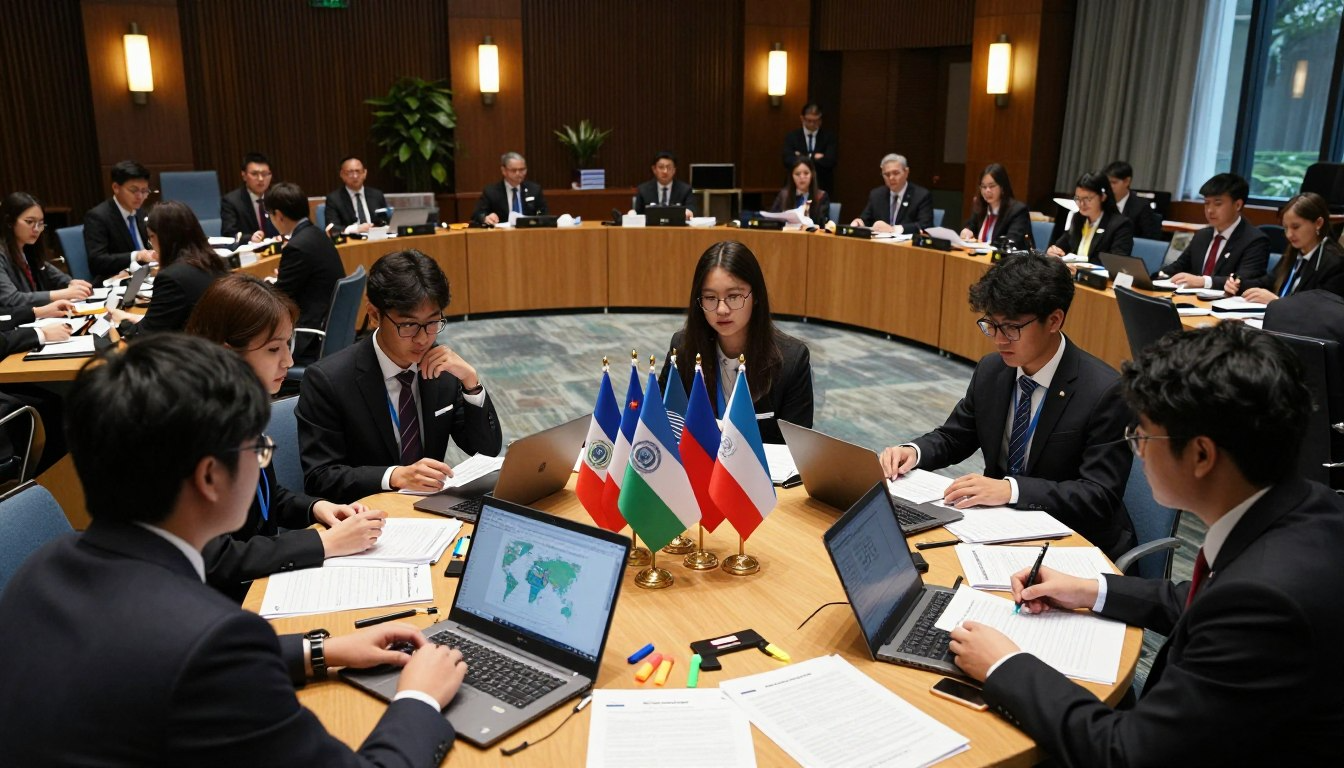
how to prepare for nmun and hmun
To excel across these diverse environments, you should focus on several key areas of adaptation:
- Procedural Mastery: Learn the specific rules of procedure for each conference, as they often vary between European, Indian, and American circuits.
- Chair Expectations: Use AI-driven insights to analyze the background guides and predict what your specific chair values most.
- Strategic Flexibility: Adjust your speaking style to be either more aggressive or more diplomatic depending on the committee’s regional norms.
Ultimately, learning how to prepare for nmun and hmun involves more than just memorizing facts. It requires you to tailor your performance to the specific standards of the circuit you are attending. When you align your preparation with the unique requirements of each conference, you ensure that your contributions remain relevant, impactful, and highly visible to the chair.
How to Use AI for Diplomatic Protocol and Speech Writing
Your ability to command the floor depends entirely on your grasp of formal diplomatic protocol. When you understand the rules of procedure, you maintain your credibility and influence throughout the entire conference. Conversely, a failure to follow protocol often results in confusion and chaos, which can quickly derail your committee performance.
To stay ahead, you need reliable mun speech writing support to craft opening speeches and moderated caucus points. AI tools allow you to generate content that adheres to the strict procedural requirements of the United Nations. By using these resources, you ensure your arguments remain both eloquent and technically accurate.
You can leverage AI-powered templates to structure your speeches for maximum impact. These templates help you integrate formal language while keeping your points concise and persuasive. Consistency is key when you are navigating complex debates, and these tools provide the structure you need to succeed.
Whether you are drafting an opening statement or preparing for a rapid-fire moderated caucus, high-quality mun speech writing support is your best asset. By automating the technical formatting, you free up your mental energy to focus on strategy and coalition building. Remember that the most successful delegates are those who master the rules before they even step into the room.
Purchasing Options and Getting Started with the Guide
Getting started with this comprehensive guide is simple, with options available for every budget and preference. We believe that high-quality mun conference resources should be accessible to every student, regardless of their preferred reading format.
Kindle, Paperback, and Hardcover Availability
You can choose the version that best fits your lifestyle and study habits. Whether you prefer the portability of a digital device or the tactile feel of a physical book, we have you covered.
The following table outlines the available formats and their respective price points to help you make an informed decision:
| Format | Price | Best For |
| Kindle | $9.99 | Instant access and travel |
| Paperback | $25.99 | Note-taking and study |
| Hardcover | $34.99 | Durability and collection |
Accessing the Author Page and Affiliate Resources
To dive deeper into the methodology, you can visit the official author page at amazon.com/author/yogesh.vaidya. This page provides additional insights and updates that will keep you ahead of the curve in any committee session.
If you are ready to secure your copy, please use the affiliate link https://amzn.to/430dIJa to purchase your guide today. Beyond delegate preparation, this book also provides essential tips for those looking to learn how to chair a mun committee using the same AI-driven strategies.
By utilizing these mun conference resources, you gain a competitive edge that transforms your performance. Start your journey toward becoming a more effective leader and diplomat right now.
Conclusion
Mastering the art of Model United Nations remains a journey of continuous improvement and strategic adaptation. You hold the power to transform your committee performance by integrating these 1,001 AI prompts into your daily practice routine.
This guide provides the tools you need to refine your research, sharpen your coalition building, and master crisis management. You will discover exactly how to win best delegate at mun by leveraging technology to support your unique voice.
Success stays within your reach when you combine your natural passion with the right digital resources. Yogesh Vaidya designed these prompts to help you navigate complex simulations with confidence and precision.
You can download a free sample of these prompts today to start your journey toward excellence. Use these insights to prepare for your next conference and learn how to win best delegate at mun with ease.
Your potential for growth in the international circuit is limitless. Start applying these advanced techniques now to see a measurable difference in your committee outcomes.